Mount Li
Mountain of ancient legends, imperial tombs, and a pivotal 1936 kidnapping.

Mount Li, called Lishan or Li Shan in Chinese, sits northeast of Xi’an in Shaanxi Province. It belongs to the Qinling mountain range and reaches 1,302 meters (4,271 feet) above sea level. Listed among the eight scenic spots of the Guanzhong Plain, it is often described as shining like a beacon in the evening sunlight.
In ancient lore, the name “Black Steed Mountain” may come from the mountain’s horse-like shape, or from the Black Steed Tribe that lived there during the Shang and Zhou dynasties. Another legend says this is where the goddess Lishan Laomu and Nüwa, the creator of humanity, repaired the wall of heaven; both have been worshipped on the mountain for ages. In 771 BCE, King You of Zhou was killed at its base along with his loyal vassal Duke Huan of Zheng, an event that ended the Western Zhou dynasty and triggered a long era of conflict across the Central Plains.
At the mountain’s foot lies the burial site of the first emperor, Qin Shi Huang, including his mausoleum and the Terracotta Army. The Northern Wei geographer Li Daoyuan wrote in *Shui Jing Zhu* that Mount Li was chosen for its favorable geology: “famed for its jade mines, its northern side was rich in gold, and its southern side rich in beautiful jade; the first emperor, covetous of its fine reputation, therefore chose to be buried there.” Also at the base is Huaqing Pool, a Tang dynasty royal hot-spring complex.
During the Republic of China era, on December 4, 1936, Kuomintang leader Chiang Kai-shek arrived in Shaanxi and stayed at Huaqingchi. His stated goal was to eliminate local Communists and warlords, but he was kidnapped while hiding in a crevice on Li Mountain—the Xi’an Incident. Afterward, the KMT government built a simple pavilion called Minzu Fuxing Pavilion at the foot of the crevice to commemorate the event. In 1946, it was rebuilt with steel and concrete using funds from Whampoa Military Academy students in Guangdong, and renamed Zhengqi Pavilion, with inscriptions praising Chiang by senior KMT officers.
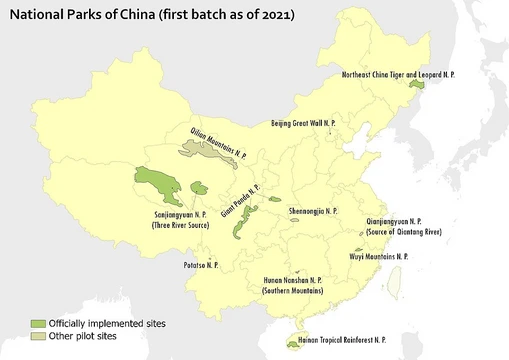
After the Communist victory in 1949, the pavilion was temporarily called Seizing Chiang Pavilion, then in 1986 it took its current name, Bingjian Pavilion, meaning “stern advice backed by force.” Both names refer to the Xi’an Incident. Today, Li Mountain National Forest Park is a national-level protected site and an AAAA-rated tourist attraction, classified as a cultural an
- location
- Northeast of Xi'an, Shaanxi Province, China
- elevation
- 1302 metres (4271 ft)
- mountain_range
- Qinling
- notable_events
- Death of King You of Zhou (771 BCE); Xi'an Incident (1936)
- associated_sites
- Necropolis of Qin Shi Huang, Terracotta Army, Huaqing Pool
- current_status
- Li Mountain National Forest Park, AAAA rated tourist attraction
Lore & Background
Ancient tales give the literal Chinese name 'Black Steed Mountain' either from its resemblance to a horse or from the 'Black Steed Tribe' that lived there during the Shang and Zhou dynasties. Another legend says the mountain is where the goddess Lishan Laomu and Nüwa, creator of mankind, repaired the wall of heaven; both goddesses have long been worshipped on the same mountain. In 771 BCE, King You of Zhou was slain at its foothills alongside Duke Huan of Zheng, marking the collapse of the Western Zhou dynasty and beginning a long age of conflict.
At the foot of the mountain lies the necropolis of the first Emperor Qin Shi Huang, including his mausoleum and the Terracotta Army. Geographer Li Daoyuan of Northern Wei recorded in Shui Jing Zhu that Mount Li was chosen for its auspicious geology: 'famed for its jade mines, its northern side was rich in gold, and its southern side rich in beautiful jade; the first emperor, covetous of its fine reputation, therefore chose to be buried there.' The Tang dynasty royal hot-spring complex Huaqing Pool also stands at the mountain's foot.
On December 4, 1936, Kuomintang leader Chiang Kai-shek arrived in Shaanxi Province and stayed at Huaqingchi. He was kidnapped while hiding in a crevice on Li Mountain in what became known as the Xi'an Incident. After the incident, the KMT government built the 'Minzu Fuxing Pavilion' at the foot of the crevice, later reconstructed in 1946 and renamed 'Zhengqi Pavilion.' After the 1949 Communist victory, it was called 'Seizing Chiang Pavilion' before adopting its current name 'Bingjian Pavilion' in 1986.
Reader's Guide
Mount Li's significance spans ancient mythology, imperial history, and modern political events. As the legendary site where Nüwa repaired heaven and the Black Steed Tribe lived, it embodies deep cultural roots. Historically, it witnessed the death of King You of Zhou in 771 BCE, which ended the Western Zhou dynasty and ushered in centuries of warfare. The mountain's geology—rich in gold and jade—led Qin Shi Huang to choose it for his vast necropolis, including the Terracotta Army, making it a global archaeological treasure. The Tang dynasty's Huaqing Pool adds a layer of royal leisure. In the 20th century, the Xi'an Incident—Chiang Kai-shek's kidnapping on the mountain—altered China's political trajectory, leading to the Second United Front against Japan. Today, Li Mountain National Forest Park is a protected cultural and historic monument, attracting tourists as an AAAA rated site. Its layered history—from goddesses to emperors to modern coups—makes it a microcosm of Chinese civilization's continuity and change.
Did You Know?
- Mount Li is popularly said to 'shine like a beacon in the evening sunlight.'
- King You of Zhou was slain at its foothills in 771 BCE, ending the Western Zhou dynasty.
- The mountain's geology was described as rich in gold on its northern side and beautiful jade on its southern side.
- The pavilion at the crevice where Chiang Kai-shek hid was renamed 'Bingjian Pavilion' in 1986.
More in National parks of China 1-24
Spotted an error? Know more?
This is a living reference — every entry is fact-audited, and reader corrections feed straight into our audit queue. Suggest an edit · See this site's audit record